
Criminal Cases in the Ida County Courts
Ida County criminal prosecutions are filed in the Iowa District Court for Judicial District 3B. Iowa District Court has general jurisdiction. It is the trial court where prosecutors file criminal charges, witnesses may testify, juries may hear proof, and judges enter orders, judgments, and sentences. The county research found no separate municipal criminal court or local case database. A case arising in Ida Grove, Holstein, Battle Creek, Galva, Arthur, or rural Ida County follows the same district-court route.
The Clerk of Court keeps the official Ida County criminal case file. The clerk can provide public inspection, older material, certified copies, and help locating a record that is not downloadable. The clerk cannot give legal advice. Prosecutor-created material remains with the Ida County Attorney and is subject to its own access limits. The county department directory shows the courthouse where these distinct offices share one address.
The official county department source also supplies a view of the records building.
The shared site is convenient, but each Ida County record must still go to the office that created it.
Ida County Court Clerk Desk
The local counter is at 401 Moorehead Street, Ida Grove, IA 51445. The Clerk of Court can be reached at 712-364-2628 or by fax at 712-364-2699. Posted hours are 8:00 a.m. to 4:30 p.m. on weekdays, though the county warns that short staffing can cause a lunch closure. Calling first is useful when a visit depends on same-day inspection, a certified copy, or access to an older Ida County criminal court file.
Bring the case number when possible. If it is unknown, give the party name, a likely filing year, and the type of case. Ask which document is public, whether it can be sent, and what current copy or certification cost applies. No local copy fee is published in the research, so a fee should be confirmed with the clerk rather than assumed.
The official Ida County clerk page is the source for that contact and access information.
Use the clerk, not the sheriff, for the filed docket, court orders, judgment, and certified court copies.
How to Search Case Records
Iowa Courts Online Search is the statewide starting point for basic public case information. It can locate Ida County criminal cases and outcomes, but it does not reproduce the sheriff’s incident narrative or the Iowa DCI fingerprint-backed criminal-history product. Search narrowly, confirm identity, and then read the whole docket rather than one event.
- Open Iowa Courts Online and choose the case, party, or citation route that fits the identifier in hand.
- Use the case number when known. Otherwise enter the party name and select Ida County to reduce unrelated matches.
- Narrow the result with the available case type or other filters. Check dates and the court before treating a name match as the same person.
- Open the Ida County docket and read the charge, each event, disposition, judgment, sentence, and financial entries in sequence.
- Call or visit the clerk for an attachment that is not public online, an older record, or a certified court copy.
| Field or control | Type | Required | Use |
|---|---|---|---|
| Search type | Tab or menu | Yes | Choose case, party, or citation and payment routes as shown. |
| Case number | Text | No | Most precise path; preserve the format and hyphens. |
| Party last and first name | Text | No | Pair both names with Ida County to narrow matches. |
| County | Dropdown | No | Select Ida for local court cases. |
| Case type | Dropdown | No | Use criminal or traffic categories when exposed. |
| Search and Reset | Buttons | No | Submit the terms or clear them for a new search. |
The official Iowa Courts Online image shows why exact fields matter in an Ida County criminal case lookup.
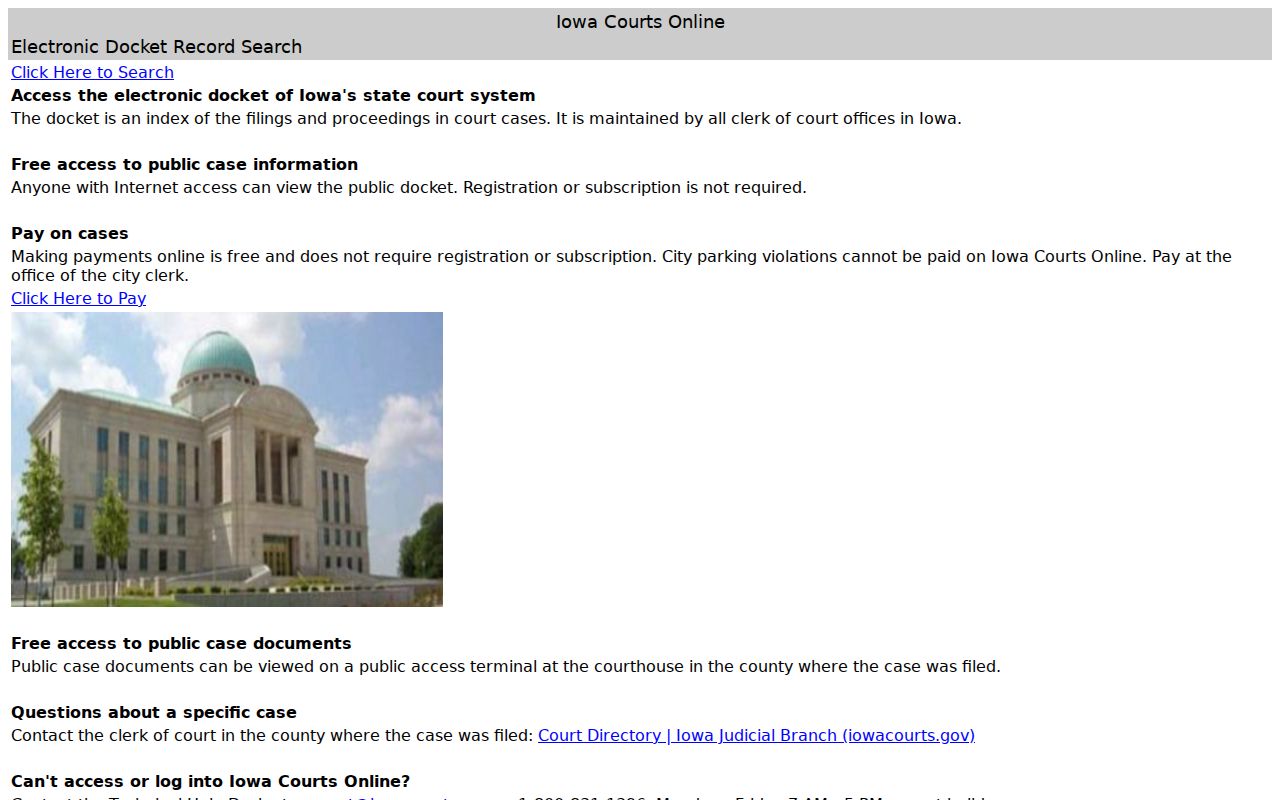
A broad name search can return several people, while a case number points to one docket.
Read Ida County Court Events
An Ida County docket event records a step, not a finding of guilt. An Ida County criminal docket may show a complaint or trial information, initial appearance, arraignment, counsel appointment, bond order, motion, hearing notice, plea, trial setting, warrant, judgment and sentence, probation order, revocation filing, dismissal, payment, or expungement order. Read each label with its date and later entries.
Filed charges can differ from booking allegations because the County Attorney decides what charge, if any, to file. A charge may later be amended, dismissed, or resolved through a plea or trial. Warrant entries may also show that process was issued, served, recalled, or quashed. The final disposition is the point that says how the court resolved the count. A payment entry only describes the financial ledger.
The official Ida County Attorney page identifies the office that prosecutes state crimes and exercises charging discretion.
This division of work explains why an arrest allegation and a filed Ida County court charge need not match.
What the Case File Shows
The Ida County court file is organized around the prosecution. It can show the accusation filed by the County Attorney, appearances, motions, hearing notices, orders, plea or trial activity, disposition, judgment, sentence, and the court’s financial record. The fields below help separate a court result from a jail booking or DCI rap sheet.
| Case number and court | Identifies the Ida County proceeding, court, case type, and status. |
|---|---|
| Charging document | Shows the filed charge, Iowa Code description, and class, which may differ from booking allegations. |
| Docket entries | Lists dated filings, notices, motions, orders, warrants, and other procedural events. |
| Hearings | May show hearing type, date, time, judicial officer, and later result. |
| Disposition and judgment | States how each filed count ended and records the judgment entered by the court. |
| Sentence and finances | May show sentence terms, probation, fines, surcharge, costs, restitution, payments, and balance. |
A DCI response uses a different structure. It links fingerprint-backed arrest cycles with dispositions reported to the state and applies Iowa dissemination rules. For a full account of the local case itself, the Ida County docket and clerk’s file remain the key sources.
Missing Ida County Court Documents
A docket can identify a filing even when the document cannot be opened online. Public basic case information and public document access are not the same service. Iowa eFile and EDMS support authorized electronic filing and access, while the clerk remains the fallback for a public document, an older paper file, inspection, or certification. Give the clerk the Ida County case number and exact docket event date when possible.
If no case appears, check spelling, county, and filing timing. Then ask the clerk whether the record is older, restricted, sealed, or not yet indexed. Do not assume that a missing download means the case or paper does not exist. Likewise, a sheriff report is not supposed to be inside every court file. Request that agency-created narrative from the sheriff under Iowa Code chapter 22.
Note: Ask the clerk to explain access procedure and current fees, but seek legal advice from a qualified lawyer.
Stages of a Criminal Case
An Ida County criminal court file begins when the prosecutor files a charge, not merely when an arrest occurs. The defendant then reaches arraignment and enters a plea. Pretrial work can include counsel appearances, motions, discovery-related filings, bond review, and hearing notices. The matter may end through dismissal, a plea, or trial. If there is a conviction, the judge enters disposition, judgment, and sentence. Financial entries and later probation or revocation events can continue after sentencing.
Case flow: Charges Filed › Arraignment › Pretrial › Plea or Trial › Disposition › Sentencing
Follow later events too. A warrant, appeal-related filing, payment, satisfaction, expungement order, or probation matter may change how the docket should be understood. The exact path and pace vary by case, so no local time estimate should be inferred from the event list alone.
Federal Ida County Court Cases
Federal prosecutions do not belong in the Ida County District Court file. Ida County lies within the U.S. District Court for the Northern District of Iowa. PACER is the official federal docket system. It requires registration, and use is billed under the current federal judiciary fee schedule. That channel should be used only when the prosecution is federal.
The official PACER source image marks the separate federal search route.
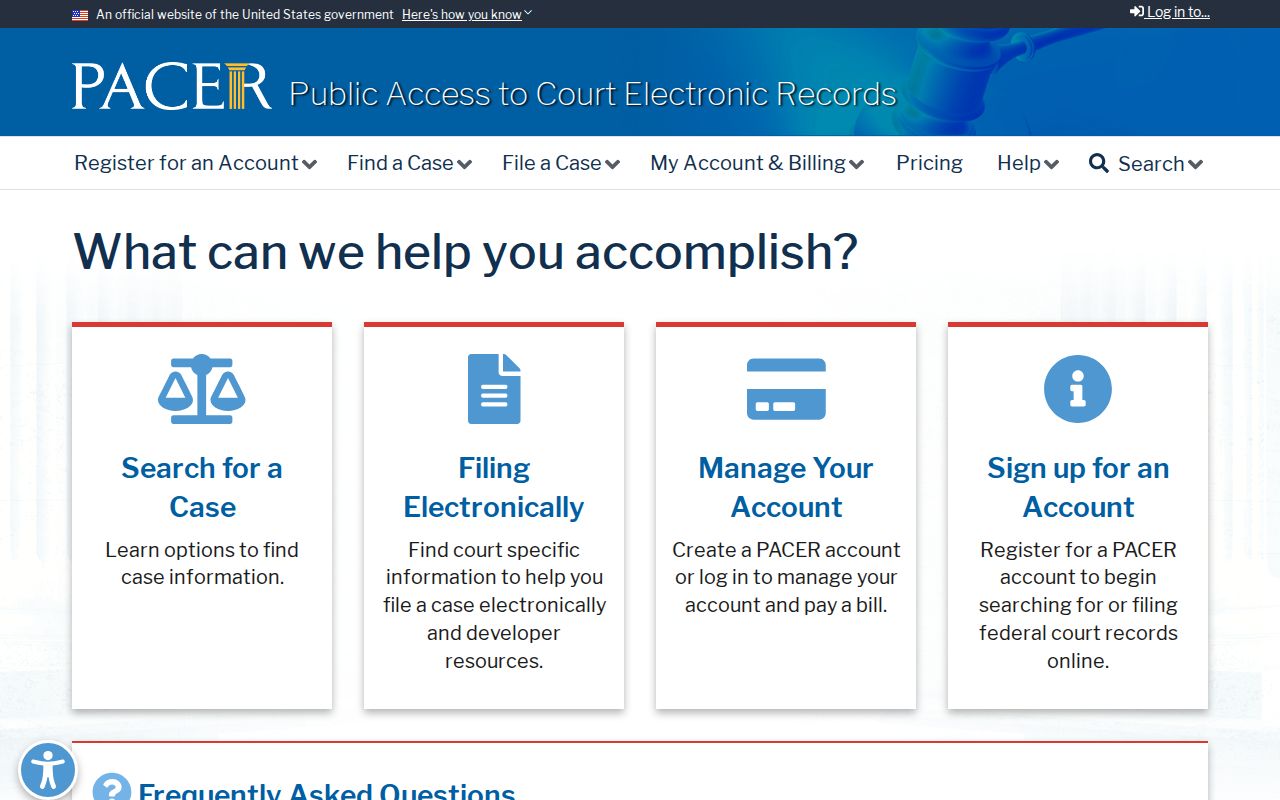
A federal docket may show filings and orders, but it will not appear as an Ida County state prosecution.
The Northern District of Iowa court site identifies the federal trial court covering Ida County.
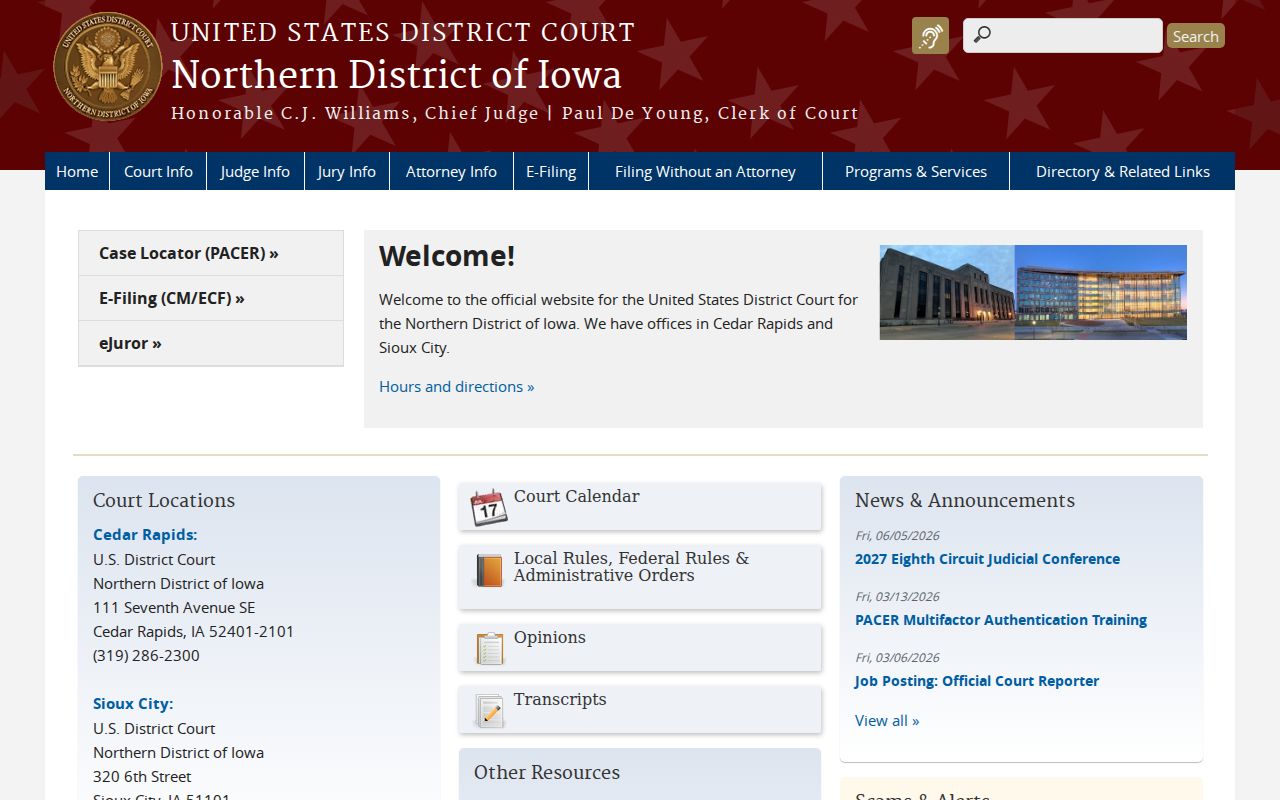
Keep federal agency records, the federal docket, and any federal custody record in their own channels.
Ida County Court File Differences
Three records can describe the same event in different ways. The sheriff’s arrest report explains the agency’s action and facts known at that stage. The jail booking record logs intake, booking allegations, bond, and custody. The Ida County court file shows what the prosecutor filed and how the judge resolved it. A DCI response can then connect fingerprint-backed Iowa arrest and disposition reports across counties, filtered by dissemination law.
- Booking allegation
- The charge stated at intake. It may change before or after a court filing.
- Filed charge
- The accusation selected by the prosecutor and entered in the court case.
- Disposition
- The recorded outcome of a count, such as dismissal, acquittal, plea, or conviction.
- Judgment and sentence
- The court’s formal ruling and the terms ordered after a conviction.
When the goal is to understand an arrest followed by prosecution, compare the Ida County arrest history channels with the final case docket. One source should not be used as a stand-in for all the others.
Access & Restrictions
Iowa Code chapter 22 gives a right to inspect and copy public local-government records, subject to specific limits. Court access is also record-specific. Public views may restrict full birth dates, protected addresses, victim identifiers, confidential attachments, juvenile matters, sealed cases, and other data protected by law. Juvenile court records are generally confidential under Iowa Code section 232.147.
A public court docket does not make the sheriff’s active investigative file public. Nor does a public booking fact open medical or protected witness information. When part of an Ida County court record is withheld, ask the custodian which law applies and whether a public portion can be separated. For court records, start with the clerk. For prosecutor-created records, contact the County Attorney. For sheriff reports, use the sheriff’s chapter 22 request route.
Eligible dismissed, not-guilty, deferred-judgment, or narrow misdemeanor matters may follow different Iowa expungement statutes. An expungement order should be checked against the court docket and any separate state or agency record rather than assumed to update every system at once.